
Underpaid Insurance Claim: How the Appraisal Clause Resolves a Valuation Dispute

When a property insurance carrier’s estimate is lower than the documented cost of restoring the property, the policyholder may be facing an underpaid insurance claim. In some situations, the policy’s appraisal clause can provide a structured way to resolve a disagreement about the amount of loss.
Appraisal is not a universal solution. It generally addresses valuation, not whether the policy provides coverage. The correct process depends on the policy language, the type of property, the facts of the loss, and the law that applies in the relevant jurisdiction.
This article explains how the appraisal provision works, when it may apply, and how a policyholder can prepare for the process.
What the Appraisal Clause Generally Does
An appraisal clause, also called an appraisal provision, is a section of a property insurance policy that establishes a procedure for resolving a disagreement about the amount of loss.
A typical clause allows each party to select an appraiser. The two appraisers then attempt to agree on the amount of loss. If they cannot agree, they may submit the disputed issues to a neutral umpire. Depending on the policy and applicable law, an agreement between the appraisers or a decision by one appraiser and the umpire may determine the amount of loss.
Appraisal may address:
- Repair or replacement costs.
- Quantities of damaged materials.
- Labor and material pricing.
- Actual cash value.
- Replacement cost calculations.
- Depreciation.
- Certain disputed components of the estimate.
The central distinction is important. Appraisal generally determines the value of covered damage. It does not ordinarily decide whether a policy exclusion applies, whether a peril caused the loss, or whether the carrier properly denied coverage.
Scope Agreement Comes Before Valuation
Before appraisal begins, the parties should identify what damage is within the appraisal process. This is often called defining the scope of loss.
The scope identifies the property items and repair work that the parties agree are part of the claim, or that a court or other authorized process has determined may be considered. Valuation then determines what those items should cost.
For example, the parties may agree that a roof was damaged by a covered event but disagree about:
- The number of roofing squares.
- Required underlayment.
- Labor rates.
- Code-required upgrades.
- The appropriate replacement method.
- Depreciation.
- General contractor overhead and profit.
That is more likely to present a valuation dispute.
A different issue arises when the carrier maintains that the roof damage was caused by wear and tear, an excluded condition, or an uncovered event. That may be a coverage or causation dispute rather than a valuation dispute.
Some jurisdictions treat limited causation questions as part of appraisal when coverage is otherwise conceded. Flood insurance guidance, for example, generally requires the parties to agree on the scope of covered damage before appraisal is used for pricing.
The policyholder should not assume that every disputed line item belongs in appraisal. The file should separate covered and agreed items, valuation disagreements, and coverage or causation issues.
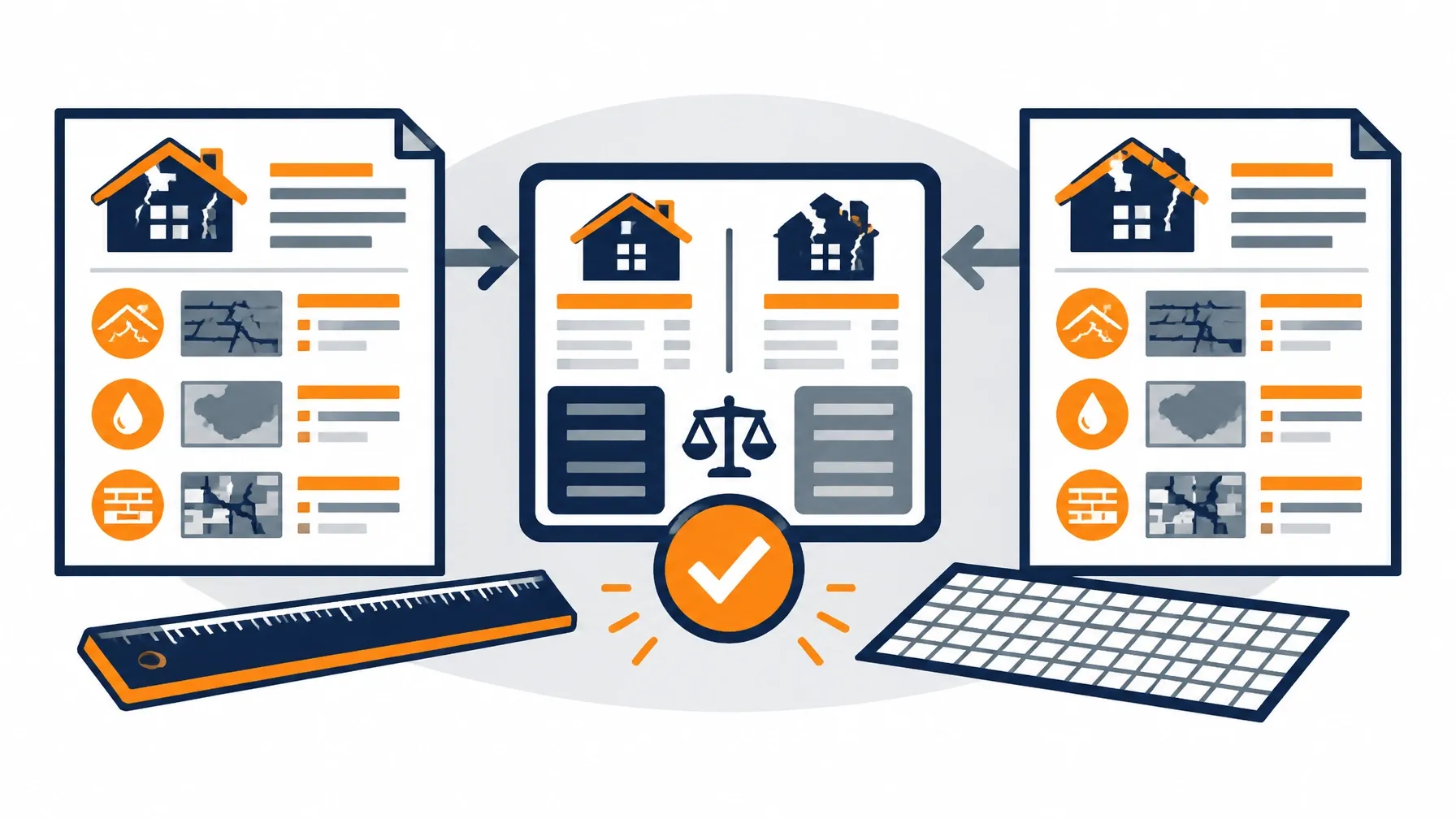
Appraisal Compared With Other Claim Responses
An appraisal is different from several other actions a policyholder may take during an insurance claim dispute.
Rebuttal
A rebuttal responds to the carrier’s estimate or position. It may include a revised estimate, photographs, invoices, expert opinions, engineering information, and policy analysis.
A rebuttal can be useful before appraisal. It may clarify the disagreement and identify which items are genuinely disputed.
Denial challenge
A denial challenge addresses the carrier’s position that the policy does not cover the loss or a specific component of it. It may involve policy interpretation, causation evidence, exclusions, conditions, or legal arguments.
Appraisal generally should not be used to force the panel to decide those legal questions.
Litigation
Litigation is a court proceeding. It may address coverage, policy interpretation, appraisal enforcement, breach of contract, statutory claims, or other issues depending on the jurisdiction and facts.
Appraisal may occur before or during litigation, but an appraisal award generally does not resolve every issue in a lawsuit.
When Appraisal May Be Appropriate
Appraisal may be appropriate when:
- The parties agree, or the policy establishes, that the property damage is covered.
- The principal dispute concerns the amount of loss.
- The carrier has issued an estimate that appears incomplete or materially underpriced.
- The policy contains an appraisal clause that can be invoked by the policyholder.
- The policyholder can present a documented, itemized valuation.
- The scope of the appraisal can be defined without asking the panel to decide legal coverage questions.
Appraisal may not be the right tool when:
- The carrier has denied the claim entirely.
- The primary dispute concerns an exclusion.
- The cause of damage remains unresolved.
- The policyholder has not satisfied important post-loss duties.
- The appraisal demand is untimely under the policy or applicable law.
- The proposed appraisal includes issues outside the panel’s authority.
A careful review of the full policy, endorsements, claim correspondence, deadlines, and governing law should occur before appraisal is demanded.
How to Invoke Appraisal in Writing
A written appraisal demand should be specific and controlled. It should generally include:
- The policy number and claim number.
- The property address.
- The date and type of loss.
- A statement that the parties disagree about the amount of loss.
- A description of the valuation items in dispute.
- The name and contact information of the policyholder’s proposed appraiser.
- A request for the carrier to identify its appraiser.
- A request for the next steps in selecting an umpire.
- A reservation of coverage, causation, policy interpretation, deadline, and statutory rights.
- A request for written confirmation of the carrier’s position.
The demand should not concede disputed coverage or authorize the panel to decide issues that the appraisal clause does not cover.
The policyholder should also confirm whether the policy requires a proof of loss, examination under oath, property inspection, document production, or other conditions before appraisal can be compelled. Failure to satisfy applicable post-loss duties may become a carrier objection.
Selecting Appraisers and an Umpire
Each side typically selects its own appraiser. The policy may require the appraiser to be competent and impartial. Some policies and jurisdictions also restrict financial conflicts or contingent compensation arrangements.
The two appraisers then attempt to agree on a neutral umpire. If they cannot agree, the policy or local law may provide a court process for selecting one.
The umpire’s role is not to become an advocate for either party. The umpire should help resolve valuation disagreements within the authority granted by the policy and applicable law.
Selection should be documented carefully. The policyholder should review:
- The appraiser’s experience with similar losses.
- Independence from the carrier and policyholder.
- Fee structure.
- Experience with commercial property or large loss insurance claims, when applicable.
- Familiarity with estimating platforms, construction pricing, and code requirements.
- The ability to review technical evidence and produce an itemized valuation.
A public adjuster may assist with claim preparation and appraisal strategy, but the public adjuster’s fee arrangement and financial interest should be evaluated before appointing that person as an appraiser. In some circumstances, a contingent interest in the result may create an impartiality objection.

Documentation Required Before Appraisal
Appraisal should not begin with an unsupported demand for a higher number. The policyholder needs a defensible estimate supported by organized evidence.
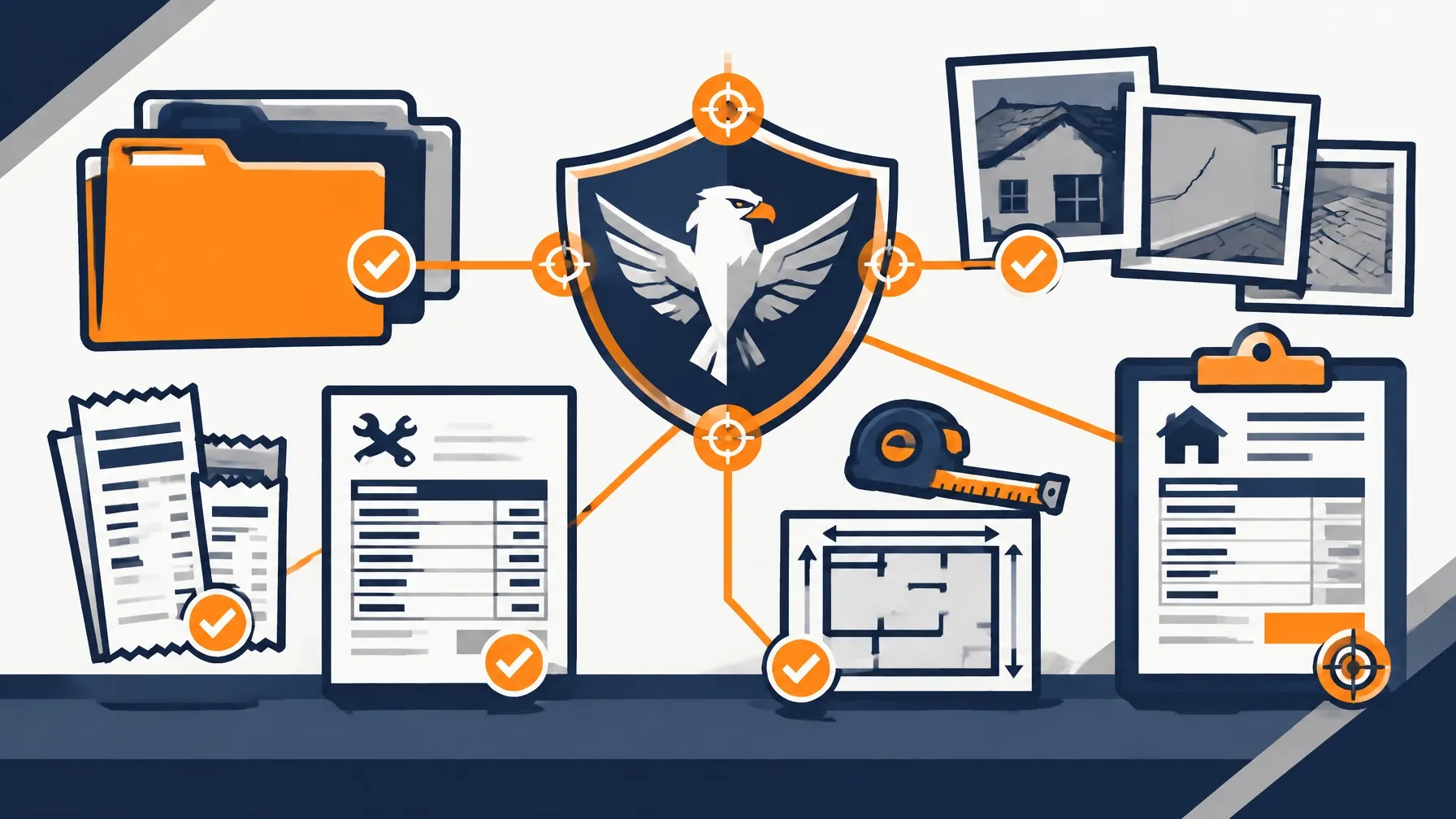
The file may include:
- The complete policy and endorsements.
- The carrier’s estimate and payment ledger.
- A detailed policyholder estimate.
- Photographs and videos of the damage.
- Measurements and diagrams.
- Repair proposals and contractor bids.
- Invoices and receipts.
- Engineering or expert reports, when relevant.
- Building code requirements.
- Permit information.
- Depreciation calculations.
- Business interruption or extra expense documentation, if covered and within the applicable process.
- Records showing prior condition and maintenance, when relevant.
- A comparison identifying each disputed line item.
A large loss insurance claim or commercial property claim may require additional documentation for multiple buildings, specialized equipment, tenant improvements, machinery, code compliance, business income, or phased repairs.
The estimate should explain quantities, unit costs, labor, materials, taxes, waste, access requirements, equipment, supervision, and other relevant components. It should also distinguish between items supported by the policy and items that remain subject to a coverage or causation dispute.
Timelines and Cost Mechanics
Appraisal timelines vary. The policy may establish deadlines for making a demand, selecting appraisers, selecting an umpire, or completing the process. A carrier may also request additional information or object to the demand.
Costs commonly include:
- The policyholder’s appraiser fee.
- The carrier’s appraiser fee, paid by the carrier.
- A shared umpire fee.
- Potential engineering, estimating, legal, or consulting expenses.
- A public adjuster fee, if the policyholder has retained one.
The policy or local law may allocate costs differently. Expenses are not automatically recoverable simply because the appraisal results in a higher valuation.
The policyholder should obtain fee terms in writing before appointing an appraiser or engaging other professionals. The potential cost should be evaluated against the amount in dispute and the importance of establishing a reliable valuation.
Common Carrier Objections
Carriers may object to appraisal for several reasons, including:
- No genuine disagreement about the amount of loss.
- An untimely demand.
- Waiver based on claim conduct.
- Failure to complete post-loss duties.
- An incomplete proof of loss.
- An attempt to submit coverage, causation, or policy interpretation issues.
- An unqualified or financially interested appraiser.
- An effort to include unrelated or previously resolved items.
- A demand that does not identify the disputed valuation.
An objection does not automatically determine whether appraisal is available. The response should address the policy language, the documented disagreement, and the limits of the requested appraisal.
A clear comparison can help separate the issues:
- Covered and undisputed: Items the carrier has accepted or paid.
- Covered but disputed in value: Items appropriate for valuation review.
- Coverage or causation disputed: Items that may require separate resolution.
The Role of a Public Adjuster
A public adjuster represents the policyholder, not the insurance company. The work may include damage assessment, documentation, estimating support, carrier coordination, and valuation advocacy.
In an underpaid insurance claim, a public adjuster may help by:
- Reviewing the policy and claim file.
- Comparing the carrier’s estimate with the actual repair scope.
- Identifying missing trades, quantities, and pricing.
- Organizing photographs, invoices, and expert materials.
- Preparing a defensible estimate.
- Separating valuation issues from coverage disputes.
- Coordinating inspections and communications.
- Supporting appraiser selection.
- Preparing the policyholder’s position for appraisal.
- Tracking deadlines and written responses.
The process begins with a complete record. It continues with controlled scope development, transparent valuation, and consistent communication.
Iron Hawk Adjusters provides public insurance adjusting services for residential, commercial, government, and nonprofit property owners. The company also supports insurance appraisal and valuation dispute support when the claim requires a more structured valuation process.
Frequently Asked Questions
Is appraisal available for every underpaid insurance claim?
No. Appraisal is generally intended for a disagreement about the amount of a covered loss. It may not resolve a denial, exclusion, causation dispute, or policy interpretation issue. The policy and applicable jurisdiction should be reviewed first.
Does an appraisal award decide whether the claim is covered?
Generally, no. An appraisal award usually addresses the amount of loss within the panel’s authority. Coverage, exclusions, causation, policy conditions, and other legal issues may remain unresolved.
Who pays for the appraiser and umpire?
Typically, each party pays its own appraiser, and the parties share the umpire’s fee. The policy or local law may provide different terms. Fee arrangements should be confirmed in writing.
Can a public adjuster serve as the policyholder’s appraiser?
It may depend on the person’s fee arrangement, financial interest, the policy, and applicable law. A contingent interest in the result may create an impartiality objection. A public adjuster can still assist with documentation, estimating, and appraisal preparation.
What should be included in an appraisal demand?
The demand should generally identify the policy, claim, property, disputed valuation, proposed appraiser, and requested next steps. It should also preserve coverage, causation, policy interpretation, deadline, and statutory rights.
Next Step
An initial conversation can help determine whether the claim presents a valuation dispute, a scope issue, a coverage question, or a combination of issues. There is no obligation to proceed.
To discuss a property claim, call 301-936-0617, learn more about our services, or schedule an initial conversation with Iron Hawk Adjusters.
This article provides general, high-level information about property insurance appraisal provisions. It is not legal advice and is not a substitute for individualized guidance from a qualified insurance professional or attorney familiar with the applicable policy and jurisdiction.